Unlocking Earth’s Energy
Demonstrating safe, multi-stage Enhanced Geothermal Systems for Europe.







48 months
May 2026 – April 2030
8 partners
Across 5 countries
4 + 1
EU Member States + 1 Associated Country
3
Strategic Objectives
01 — About
What UPLIFT does
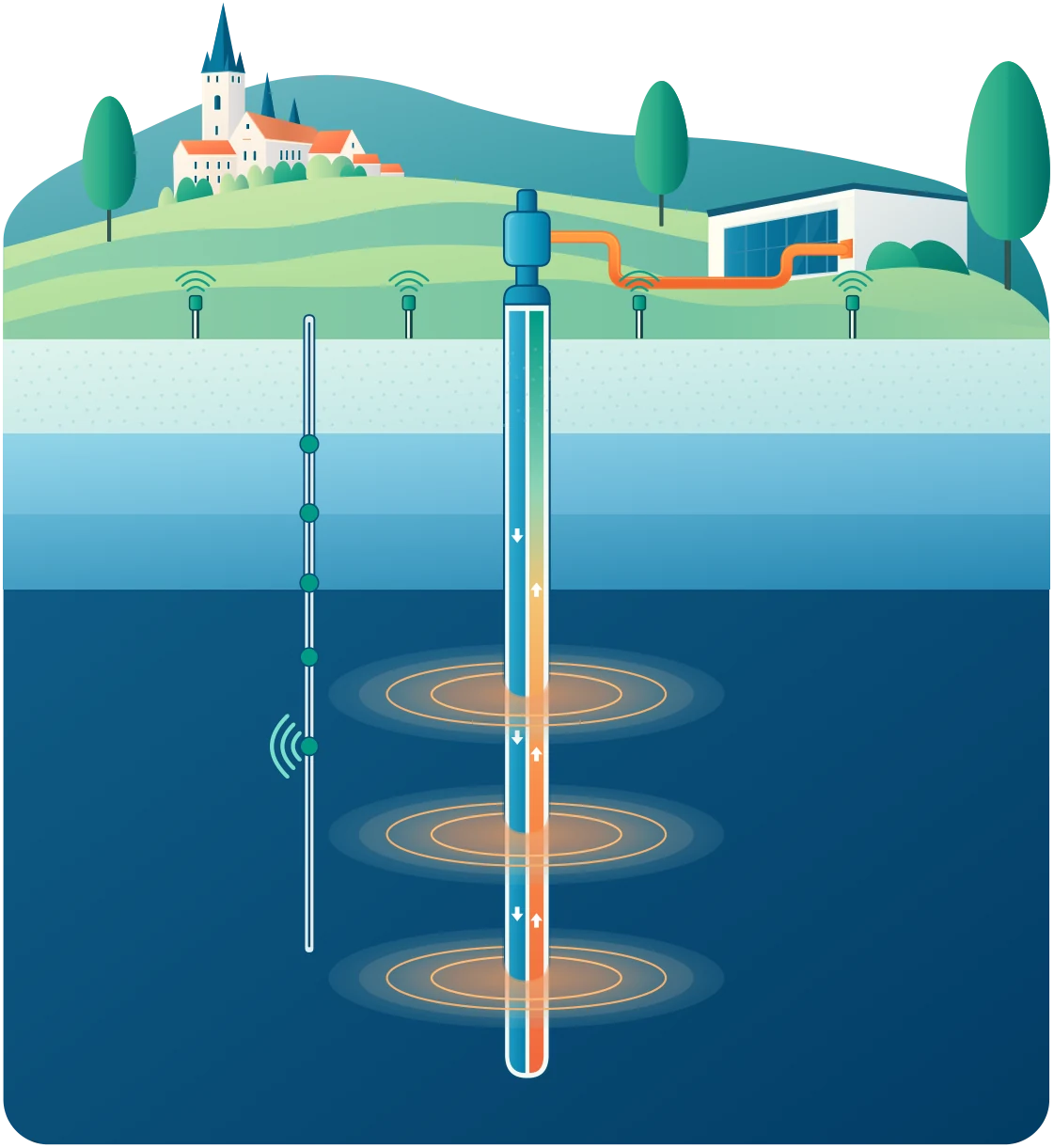
The core of UPLIFT is to demonstrate, at Czechia’s leading energy research site RINGEN, how multi-stage Enhanced Geothermal System (EGS) stimulation can be efficiently implemented in Europe, while reducing technical, social, and environmental risks, thus spearheading a potential petrothermal energy revolution.
UPLIFT will allow our team’s technologies and state-of-the-art knowledge to integrate the European societal and legal context with recent multistage stimulation success in the US, to unlock the petrothermal energy potential in Europe, facilitating a significant increase in renewable electricity and heat provision by deep geothermal energy.
02 — Open questions
Four critical questions
UPLIFT brings together key European EGS industry and research institutions to answer 4 critical questions:
01
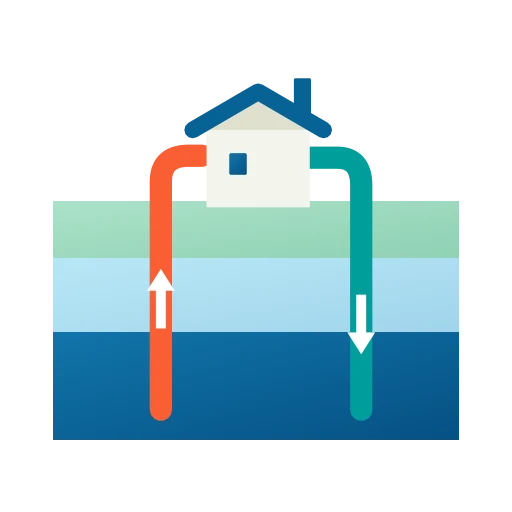
How can we reliably improve geothermal well productivity across diverse geological settings?
02
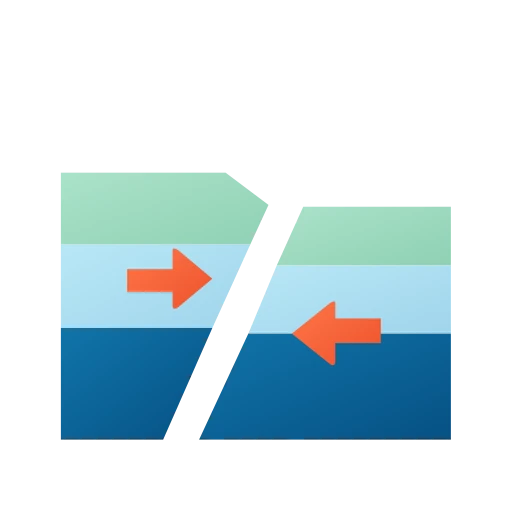
How can we mitigate injection-induced seismicity in urban areas?
03
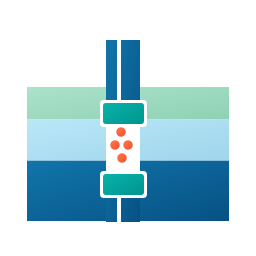
How can we perform cost-efficient multi-stage stimulation treatments?

04
How can we increase social acceptance of EGS technologies?
03 — Approach
Why · How · What
Why
The challenge
Hot, low-permeability rocks store orders of magnitude more accessible heat than conventional hydrothermal reservoirs — yet the recent US breakthroughs in unlocking them cannot be transferred to Europe directly, due to different geology, regulation, and demands for social acceptance.
How
The approach
Four proven methods, each developed beyond the current state of the art and applied in combination:
- Controlled Micro Turbine Drilling — MTD®
- Safe hydraulic shear stimulation
- Non-hazardous chemical stimulation
- Improved proppant placement
Demonstrated together at field scale at the RINGEN site in Litoměřice, Czechia.
What
Three Strategic Objectives
SO1
Zonal isolation and reservoir access
Establish hydraulic connection to natural fracture networks in low-permeability hard rock using Micro Turbine Drilling — MTD®.
SO2
Safe productivity enhancement
Validate adaptive water-only stimulation while keeping seismic risks within acceptable limits.
SO3
Lower costs, stronger social acceptance
Demonstrate commercial and social viability and establish exploitation pathways to unlock European petrothermal potential.
04 — Technical approach
What we are building
We will address these questions by developing:
01
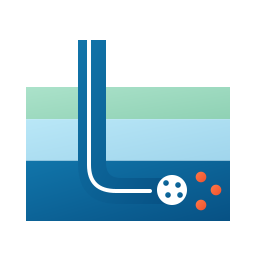
Micro Turbine Drilling
A new Micro Turbine Drilling (MTD®) bottom-hole assembly (MTD-BHA) prototype for improved reservoir access.
02
Adaptive stimulation designs
Adaptive stimulation designs for more efficient and safe permeability enhancement.
03
Laboratory experiments
Investigating the self-propping stimulation behaviour of representative European basement rocks, benchmarked against acid and proppant-based stimulation methods.

04
BedrettoLab comparison
Comparing water-only with proppant-based stimulation treatments in the BedrettoLab.

05
Digital Twins
High-fidelity, physics-based Digital Twins to guide detailed EGS, MTD, and stimulation design, as well as fast surrogate models for real-time operational decision-making.
06
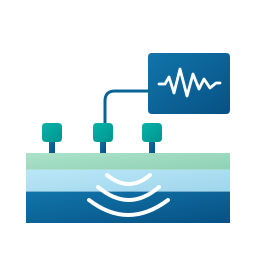
Seismic monitoring
Advancing the local seismic monitoring network to achieve high-resolution, real-time reservoir imaging, quantify induced seismicity risks, and implement adaptive risk mitigation strategies during operations.
Together, these developments will be demonstrated in a field-scale EGS pilot at RINGEN in Litoměřice, enabling:
- Cost and time reductions
- Improved geothermal performance and safety
- Real-time optimisation and predictive risk management
- Technically robust operations supporting environmental protection and social acceptance
05 — Innovation
Adaptive hydraulic stimulation
A central innovation in UPLIFT is an adaptive approach to reservoir stimulation: injection parameters are continuously adjusted in response to real-time seismic monitoring, so that hydraulic energy input — and therefore permeability — can be maximised while critical seismicity increases are detected in advance and safely managed.
At the reservoir
Cross-sectionInjection strategy
Flow rate / timeCumulative energy
Energy budget06 — Consortium
Eight partners, five countries
UPLIFT brings together 8 partners across 4 EU Member States and 1 Associated Country: 3 research centres, 2 universities, 2 SMEs, and 1 European non-profit association.
-
GFZ Helmholtz Centre for Geosciences (opens in a new tab)

-
Charles University (opens in a new tab)

-
Geo-Energie Suisse AG (opens in a new tab)
-
Fraunhofer IEG (opens in a new tab)

-
Solexperts AG (opens in a new tab)

-
Fraunhofer-Chalmers Centre (opens in a new tab)
-
European Federation of Geologists (opens in a new tab)

-
ETH Zürich (opens in a new tab)

Hover or tap a highlighted country to see its partners.
07 — News
Latest news
-
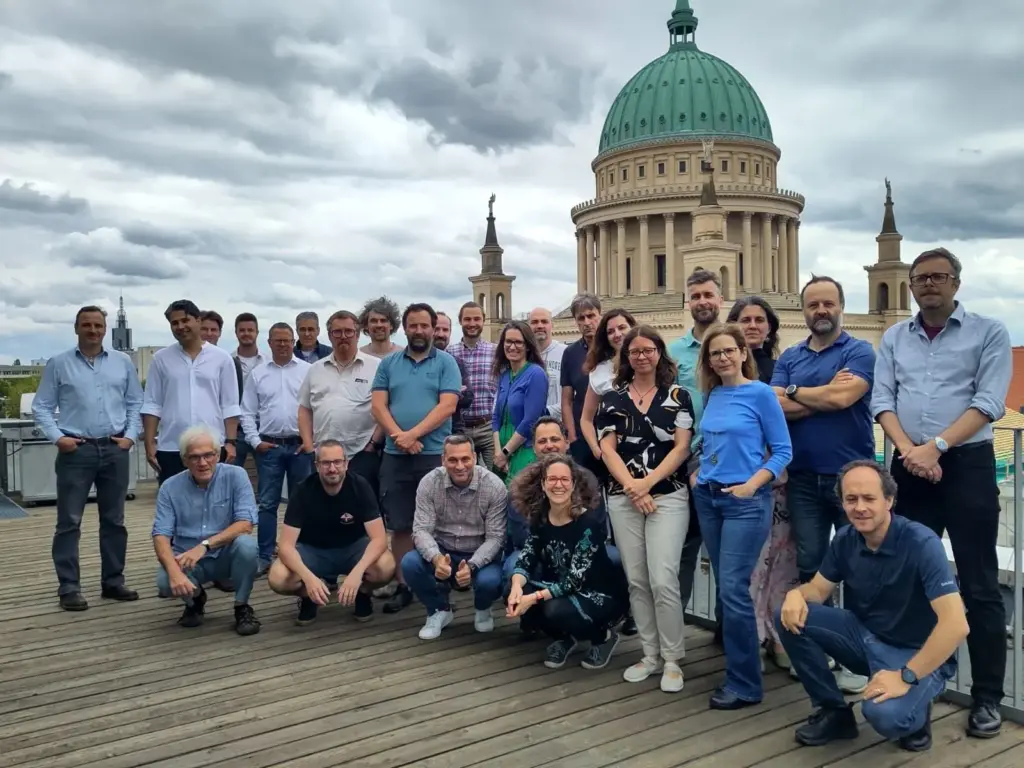
UPLIFT Project Launches
New Horizon Europe project to demonstrate safe and efficient Enhanced Geothermal Systems for a clean energy future
Coming next
Demonstration progress from RINGEN, publications, stakeholder events and exploitation opportunities will be published here as the project advances.
Get them by e-mail08 — Stay informed
Stay informed
UPLIFT will share results, demonstration updates, publications, and stakeholder events as the project progresses. One sign-up covers both the newsletter and the EGS-Connect invitation.
09 — Contact
Get in touch
GFZ Helmholtz-Zentrum für Geoforschung
Julie Friddell — Project Manager
Hannes Hofmann — Technical Coordinator
coordinator@uplift-horizon.euEuropean Federation of Geologists (EFG)
Communication, dissemination & exploitation lead.
comms@uplift-horizon.eu